Friday, 27 November 2009

Un mos sexy :)


Mergand pe strada am gasit o poza . Uitandu-ma la el am zis ca trebuie sa fac o poza sa va arat si voua :)
Read more >>

Tuesday, 24 November 2009

Scossa 6.8 Richter a nord di Tonga

Epicentro sisma a 60 km nel sottosuolo, nessuna vittima o danni

(ANSA) - SINGAPORE, 24 NOV - Un terremoto, di 6.8 gradi Richter, e' stato avvertito a circa 200 km a nord-est dell'isola-stato di Tonga, nell'Oceano Pacifico. L'epicentro del sisma e' stato a circa 60 km nel sottosuolo. Lo ha annunciato l'osservatorio geologico degli Stati Uniti secondo il quale non vi sono notizie di vittime o danni.
Read more >>

Monday, 23 November 2009

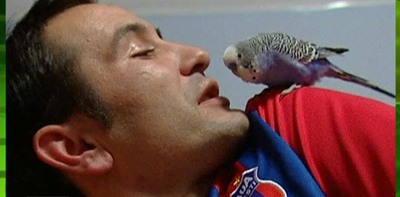
VIDEO: Un papagal stelist isi injura favoritii :)

 Vine saptamana mare, a duelului dintre Steaua si simbolul ei, Lacatus. Un papagal va impaca si capra, si varza...Stapanul lui il va duce la derby-ul din Ghencea sa strige pentru Steaua, dar si pentru Lacatus.


Un suporter al Stelei se lauda cu un papagal vorbitor innebunit dupa Steaua si Lacatus. Sunt primele cuvinte invatate de papagalul stelist.
Papagalul e mai silitor decat Kapetanos. Grecul n-a invatat romana intr-un an si jumatate. In schimb, papagalul stelist invata doua cuvinte pe luna.

Read more >>

Afghanistan: Obama,consiglio guerra


(ANSA) - WASHINGTON, 23 NOV - Nuovo consiglio di guerra del presidente degli Usa, Obama. Ha convocato oggi, in serata, i vertici del governo. Tra gli altri, prenderanno parte alla riunione il vicepresidente Biden, il segretario di Stato Clinton, il ministro della Difesa Gates, l'ambasciatore americano all'Onu Rice, l'inviato speciale per Afghanistan e Pakistan, Holbrooke, il capo degli Stati Maggiori, ammiraglio Michael Mullen.
Read more >>

Clima: pianeta vicino alla crisi


(ANSA) - ROMA, 23 NOV - Il rischio catastrofe da cambiamenti climatici tra soli 40 anni potrebbe superare la fantasia, se non si corre ai ripari entro il 2015. L'allarme e' contenuto nel rapporto Wwf-Allianz. Sono 136 le citta' portuali del mondo che rischiano gravi danni per l'innalzamento del mare. Senza un'azione immediata e' probabile che la siccita' in California, il blocco del monsone estivo in India e in Nepal o la scomparsa della foresta amazzonica colpiranno
Read more >>

MANUSA lui MICHAEL JACKSON a fost vanduta cu 350.000£!


Celebra manusa lui Michael Jackson, purtata de artist la primul sau moonwalk, a fost vanduta cu £350.000 (£212,000), sambata, la o licitatie in New York.

Manusa incrustata cu pietre pretioase, unul dintre cele mai memorabile articole vestimentare ale lui Jackson, a fost castigata prin licitatie de catre omul de afaceri chinez pe nume Hoffman Ma.

Afaceristul a licitat in numele unui hotel din Macau, China unde manusa va fi expusa.

Primul moonwalk al lui Michael Jackson, unde artistul a purtat aceasta manusa, a fost prezentat in cadrul unui show tv dedicat celei de-a 25-a aniversare Motown, in luna mai a anului 1983.

La aceasta licitatie au fost prezentate in total 70 de articole ale regretatului megastar printre care o jacheta purtata de Jackson in 1989 in Bad Tour, vanduta cu 225.000$ si o palarie fedora care a ajuns la pretul de 22.000$.

Adjudecatorul Darren Julien a declarat: "Este un tribut adus vietii si carierei sale - a fost cu adevarat un mare artist."
Read more >>

MICHAEL JACKSON a castigat 4 premii postmortem la AMA!


Michael Jackson a mai castigat 4 premii postmortem la American Music Awards, duminica trecuta, 22 noiembrie, in Los Angeles.

Premile au fost ridicate de fratele mai mare al lui Jackson, Jermaine in cadrul evenimentului sustinut la Nokia Theater.

Datorita acestor 4 premii Regele Muzicii Pop a atins inca un record, 23 de premii, fiind cel mai premiat artist din istorie.

Jackson a fost incoronat aseara Best Pop/Rock Male Artist, Best Soul/R&B Male Artist plus doua premii Best Album pentru materialul Number Ones.

Jermaine a declarat: "A vazut numai binele din toti si si-a dorit ca toata lumea sa bine. A inceput intotdeauna cu dragostea."

AMA nu a fost darnica doar cu Michael, Taylor Swift a dus acasa 5 premii printre care si Artist Of The Year.

"Doar sa fi mentionat in aceiasi categorie cu Michael Jackson, caruia ii ducem lipsa si pe care-l vom iubi mereu, este o onoare inimaginabila" a marturisit Taylor.

In cadrul show-ului au performat live Janet Jackson, Alicia Keys, Jay-Z, Rihanna si Lady Gaga.
Read more >>

Saturday, 21 November 2009

Filmul 2012


Scurta desciere:
Ne aflam in anul 2012. Jackson Curtis este un tata divortat, a carui fosta sotie s-a mutat impreuna cu cei 2 copii ai lor la noul ei iubit. Angajat ca sofer de limuzina, dar aspirand la o cariera de scriitor, acesta isi ia copiii intr-un week-end pentru o mini-excursie la parcul National Yellowstone. Aici cei 3 descopera ca mai multe sectiuni ale parcului sunt inchise de catre armata si oameni de stiinta ai guvernului. Dupa ce il intalneste pe Charlie, un angajat la radio, care crede ca toate aceste semne indica o catastrofa majora ce va duce la sfarsitul lumii, Jackson devine suspicios. Pamantul incepe sa aiba fisuri ingrijoratoare in zona Los Angeles-ului,iar catastrofele naturale progreseaza mai repede decat ar fi anticipat cineva. Jackson se intoarce in L.A. pentru a o salva pe fosta sotie si pe iubitul acestuia, inainte ca Los Angeles-ul sa se scufunde in Oceanul Pacific. In timp ce milioane de oameni mor peste tot in lume din cauza cutremurelor ce pareau sa nu se mai opreasca, Jackson se intoarce iar la parcul Yellowstone, unde il cauta si il gaseste pe Charlie, tipul care i-a spus ca sfarsitul e aproape pentru a afla mai multe raspunsuri. Profetia care spunea ca sfarsitul lumii va fi pe 21 decembrie 2012, data ce marcheaza sfarsitul calendarului mayas se dovedeste pana la urma a fi adevarata, iar Jackson incearca tot posibilul sa-si salveze familia si sa asigure ca umanitatea nu va fi complet stearsa de pe fata pamantului.

* Titlu: 2012
* Data lansare (SUA): 13 Noiembrie 2009
* Data lansare (Romania): 13 Noiembrie 2009
* Perioda filmare: 23 Iulie 2008 - ??
* Buget: 260,000,000 $
* Incasari weekend: 65,237,614 $
* Incasari totale: 65,237,614 $
* Site oficial: 2012
* Poze 2012
* Tag-uri: Numar in titlu
Read more >>

F.A.O.


The Food and Agriculture Organization of the United Nations leads international efforts to defeat hunger. Serving both developed and developing countries, FAO acts as a neutral forum where all nations meet as equals to negotiate agreements and debate policy. FAO is also a source of knowledge and information. We help developing countries and countries in transition modernize and improve agriculture, forestry and fisheries practices and ensure good nutrition for all. Since our founding in 1945, we have focused special attention on developing rural areas, home to 70 percent of the world's poor and hungry people.
FAO's activities comprise four main areas:

Putting information within reach. FAO serves as a knowledge network. We use the expertise of our staff - agronomists, foresters, fisheries and livestock specialists, nutritionists, social scientists, economists, statisticians and other professionals - to collect, analyse and disseminate data that aid development. A million times a month, someone visits the FAO Internet site to consult a technical document or read about our work with farmers. We also publish hundreds of newsletters, reports and books, distribute several magazines, create numerous CD-ROMS and host dozens of electronic fora.

Sharing policy expertise. FAO lends its years of experience to member countries in devising agricultural policy, supporting planning, drafting effective legislation and creating national strategies to achieve rural development and hunger alleviation goals.

Providing a meeting place for nations. On any given day, dozens of policy-makers and experts from around the globe convene at headquarters or in our field offices to forge agreements on major food and agriculture issues. As a neutral forum, FAO provides the setting where rich and poor nations can come together to build common understanding.

Bringing knowledge to the field. Our breadth of knowledge is put to the test in thousands of field projects throughout the world. FAO mobilizes and manages millions of dollars provided by industrialized countries, development banks and other sources to make sure the projects achieve their goals. FAO provides the technical know-how and in a few cases is a limited source of funds. In crisis situations, we work side-by-side with the World Food Programme and other humanitarian agencies to protect rural livelihoods and help people rebuild their lives.

A short history of FAO

2008
FAO holds a high-level conference on 3–5 June on the impact of climate change and the biofuel boom on food security and food prices. Attended by 43 heads of state and 100 government ministers, the conference adopted a resolution to increase assistance and investment in developing world agriculture.

2007
All 119 countries at FAO's Committee on Fisheries in Rome agree on a proposal to develop a legally binding measure to tackle illegal, unreported and unregulated fishing practices, which cause severe economic, social, biological and environmental damage.

2006
FAO unveils its high-tech Crisis Management Centre to fight bird flu and other animal health or food safety emergencies. The service monitors disease outbreaks and dispatches experts to any hot spot in the world in under 48 hours.

2006
Representatives of 96 FAO member countries at the International Conference on Agrarian Reform and Rural Development, in Brazil, make a joint declaration recognizing the role of agrarian reform and rural development for sustainable development.

2005
The 60th anniversary of FAO’s founding celebrated in a solemn ceremony attended by Heads of State and Government, Ministers and other dignitaries from all regions of the world.
Director-General Jacques Diouf re-elected for a third six-year term. FAO Conference approves additional reforms including further decentralization of staff.

2004
FAO announces the entering into force of the International Treaty on Plant Genetic Resources for Food and Agriculture, an essential legally binding agreement that encourages sustainable agriculture through the equitable sharing of genetic material and its benefits among plant breeders, farmers and public and private research institutions.

2002
World Food Summit: five years later,
attended by delegations from 179 countries plus the European Commission, reaffirms the international community's commitment to reduce hunger by half by 2015.

2001
FAO Conference adopts the legally binding International Treaty on Plant Genetic Resources for Food and Agriculture, which supports the work of breeders and farmers everywhere.

2000
FAO develops a strategy for concerted government and UN agency action to combat chronic hunger in the Horn of Africa, at the request of the United Nations Secretary-General.

1999
FAO's Committee on Fisheries adopts plans of action on fishing capacity, sharks and seabirds.

1998
An FAO-brokered legally binding convention to control trade in pesticides and other hazardous trade in chemicalsis adopted in Rotterdam.

1997
FAO launches campaign against hunger initiative TeleFood. TeleFood '97 reaches a global audience of 500 million.

1996
FAO hosts 186 Heads of State or Government and other high officials at World Food Summit in November to discuss and combat world hunger.

1995

FAO celebrates its 50th birthday.

1994
FAO launches the Special Programme for Food Security (SPFS), targeting low-income food-deficit countries (LIFDCs).

The Emergency Prevention System for Transboundary Animal and Plant Pests and Diseases (EMPRES), strengthening the Organization's existing contribution to prevention, control and, when possible, eradication of diseases and pests, is established.

FAO begins the most significant restructuring since its founding to decentralize operations, streamline procedures and reduce costs.

1991
International Plant Protection Convention is ratified with 92 signatories.

1986

AGROSTAT (now FAOSTAT), the world's most comprehensive source of agricultural information and statistics, becomes operational.

1981
The first World Food Day observed on 16 October by more than 150 countries.

1980
FAO concludes 56 agreements for the appointment of FAO Representatives in developing member countries.

1978
The Eighth World Forestry Congress, held in Jakarta, Indonesia, with the theme "Forests for people", has a profound impact on attitudes towards forestry development and FAO's work in this sector.

1976
FAO's Technical Cooperation Programme established to afford greater flexibility in responding to urgent situations.

1974
UN World Food Conference in Rome recommends the adoption of an International Undertaking on World Food Security.

1962
The FAO/WHO Codex Alimentarius Commission established to set international food standards becomes operational.

1960
Freedom from Hunger campaign launched to mobilize non-governmental support.

1951
FAO headquarters moved to Rome, Italy, from Washington, DC, the United States.

1945
First session of FAO Conference, Quebec City, Canada, establishes FAO as a specialized United Nations agency.

1943
Forty-four governments, meeting in Hot Springs, Virginia, the United States, commit themselves to founding a permanent organization for food and agriculture.
Read more >>

Friday, 20 November 2009

Assassin's Creed II is what you'd want an action sequel to be: bigger, better, and more beautiful.

The Good


* Huge, beautifully realized world to explore
* Ezio is a terrific new character
* Tombs put a spotlight on the excellent and enjoyable platforming
* A greater variety of missions, weapons, and stealth techniques than in the original
* Incredible production values.


The Bad
# Some additions are a little contrived
# A few gameplay and visual quirks.

_______________________________________________________________________________________________________________
"Nothing is true; everything is permitted." We learned this adage in the original Assassin's Creed, and Assassin's Creed II carries on the tradition beautifully, inspiring you to rethink the conspiracy at the heart of the series--and to reconsider what you should expect from a sequel. The franchise's second console outing is an impressive piece of work. Developer Ubisoft Montreal has addressed almost all of Assassin's Creed's flaws by filling its follow-up with fresh and enjoyable mission types and layering on new and mostly excellent features, while still retaining the joy of movement and atmospheric wonder that characterized the original. These enhancements range from the subtle (you can swim now) to the game-changing (there's an economy), but aside from a few small missteps, every tweak makes for a more enjoyable, more engaging adventure. The cohesive story and a terrific new character will draw you in, and you aren't apt to forget the memorable and explosive ending that will have you eager for the third installment.
Like in the first game, Assassin's Creed II occurs across two timelines: a modern-day chronology starring bartender Desmond Miles, and another featuring one of Desmond's ancestors. When you start the game, you'll catch up with Desmond right where the original left him, though as fans of the original can guess, the Abstergo labs are no longer a safe haven. You'll spend a bit of time with Desmond during the course of the game, though the shoes you most frequently fill are those of Ezio Auditore di Firenze, the charmingly impetuous son of a 15th-century Italian banker. Ezio is an instantly likable firebrand, as passionate about family and honor as he is about wine and women. When you first meet him, Ezio is living a carefree life and has not yet donned his assassin's robe, nor is he familiar with the creed. However, Ezio's devil-may-care freedom is soon cut short by murder and betrayal instigated by the assassins' greatest threat: the Templars.

Assassin's Creed's Altair was an interesting character, but only for the stealthy order he represented, not because you ever got to know the man under the white hood. Ezio is far more appealing, for he's not just quick with a secret blade, but he's a fully realized protagonist. He isn't at the mercy of the plot, but rather, the narrative evolves from his need to uncover the truth behind his sorrows. It's the personal nature of the narrative that makes Assassin's Creed II's story more compelling than its predecessor's. The few modern-day segments featuring Desmond pack a lot more punch this time around as well, and the conspiracies driving that story arc become a lot clearer and, as a result, more provocative. While the original ended on a vague and unsatisfying note, the latest chapter's climax is downright electrifying.

Ezio isn't Assassin's Creed II's only headliner. The Italy he inhabits is a character in and of itself, filled with visual and sonic details that infuse the world with life and elegance. The cities you explore--Florence, Venice, and more--are larger and more detailed than the environs of the first game. Citizens go about their daily lives, and they look authentic doing so. Merchants sweep the street in front of their shops; small groups stroll along, making conversation with each other; and courtesans smirk and cajole as you pass by. These folks aren't cookie-cutter character models. They are dressed differently enough from each other and are animated so expressively that it's as if the population would go about its business with or without your presence. More impressive are the cityscapes themselves as they unfold in front of you, inviting you to take in their splendor. This is an incredibly good-looking game: the lighting is sumptuous, the draw distance is vast, and textures are crisp. The PlayStation 3 version does suffer from some frame rate jitters, more frequent texture fade-in, and lesser color saturation. Both versions are still attractive, however, and apart from a few small flaws, you rarely get the feeling that visual compromises were made to make the game's open world run smoothly.

Assassin's Creed II's sense of place and time isn't due just to its visuals, however. Its high-quality sound design is equally responsible, delivering a busy-sounding Florence while still allowing the little quips of citizens commenting on your acrobatics to shine through. There's a good variety of such dialogue now, so you won't tire of repeated lines, and because the citizen rescues of the original Assassin's Creed have been excised, you won't hear the monotonous whines of complaining peasants. Two aspects of the sound design are particularly noteworthy: the music and the voice acting. The game's splendid orchestral score is subtle and soothing when it needs to be, never intruding on the exploration and never manipulating your emotions with inappropriate musical melodrama. The simple but effective cello and double bass motif you hear when climbing to a perch and synchronizing your map is the perfect example of this smart melodic restraint. As for the voice acting, it is uniformly excellent. Not only is Ezio voiced with charm and energy, but the surrounding cast is mostly superb--though one particular line delivered by Ezio's uncle Mario might make you cringe.

The greatest beauty of Assassin's Creed II's exquisitely detailed environments is that you can run and jump across the rooftops with ease and climb the tallest towers to get a bird's-eye view of the game's glorious vistas. You control Ezio much as you did Altair, though movement feels a bit tighter and even more fluid than before. The game strikes an excellent middle ground between responding to player input and automating actions like leaping from one surface to the next, so it's simple to leap about the city smoothly without worrying that you're going to plummet to your death on the next hop. You'll still encounter a few awkward moments here and there: simply walking off a ledge onto a rooftop a few feet below can still be bit clumsy, for example. But these moments are few, and in fact, you'll pull off some awesome-looking moves without even trying. One of the many wonders of Assassin's Creed II is that the cities look so natural that they don't seem as if they were created for you to jump around in. Yet you might leap onto a wooden outcropping and find yourself skipping across a series of them, swinging and jumping with fluidity and style. Not only are there more opportunities for organic platforming sequences like these than in the original, but there are entire closed environments called tombs tailored to this kind of jumping.

Tombs are more intricate levels in which you must retrieve an important artifact (and if you collect all of them, you are in for a special treat). Some of them are platforming puzzles of the best kind, in which you must figure out how to get from your starting point to the destination, in the manner of Prince of Persia: The Sands of Time. Ezio can't run on walls like the Persian prince, but he's incredibly agile nonetheless, and swinging and hopping about rafters and chandeliers within the tombs is great fun. A few tombs throw some additional challenges at you, such as a time limit in which to reach your goal. The best tombs, however, are those in which you pursue an enemy but run into obstacles that force you to give chase using an alternate route. The chases are excellent, and they require quick reactions, but not so quick as to be unreasonable. Flawlessly keeping up with your target without breaking your momentum is one of Assassin's Creed II's greatest thrills, and as long as you are paying close attention, you can pull it off on the first attempt.

The climbing and jumping wouldn't be as rewarding if Ezio weren't so graceful, but he is one of the best-animated characters yet seen in a game. You'll admire his footwork early in the game in particular, when his assassin's garb does not veil the incredible animations of his legs and feet. When Ezio climbs, his hands are grabbing something and his feet are resting on something. Except on rare occasions, you won't see him pulling himself up using an invisible handle or stepping on a nonexistent ledge. It's a small touch, but it goes a long way toward making these acrobatics look believable. Ezio seems even more nimble than Altair; his legs move inward and cross a bit differently during a climb, and moves connect even more slickly. The only imperfection you are likely to notice is the lack of a transition animation when you bend to loot a body or treasure chest (more on this to come).
Of course, Ezio is more than just a talented gymnast without a fear of heights. He's not afraid to shed blood when the time is right, and he's got a number of ways to exact revenge. The dual hidden blades are his best deadly toy in this regard. You can still stealthily pull off a low-profile assassination (sneak up behind a guard and stab him in the neck) or conduct a high-profile kill (pounce on your target and plunge your blade into him in a single, dramatic move). But the best addition to hidden blade kills are double assassinations: Walk between two unsuspecting guards, sink a blade into each of them, watch them crumple to the ground, and keep walking as if you were none the wiser. If you get really enamored with the dual blades, you can hang from a ledge and wait for an enemy to walk above you, stab him, and toss him to the ground below. It's particularly satisfying to do so above the Venetian canals, because the body will splash into the water and then float to the top. Or if you'd rather conduct your bloody business from above rather than below, you can wait for your target to walk below and then assassinate him in one spectacular move.

If you want to take the direct approach instead, you've got more to unsheathe than a basic sword. One of your brand-new combat moves is the ability to disarm an opponent and take his weapon. For a treat, try taking a giant axe from one of the heavily armored guards and planting it in his head, or skewering another with a stolen spear. If you like, however, you can stick with what you've got and simply pick up your fallen foe's weapon off the ground once the skirmish is done. As before, you can toss throwing knives at pesky archers, but Assassin's Creed II also gifts you with a special ranged powerhouse late in the game. Or perhaps you like to play with your victim before it's time to recite the requiem. If so, stab him with your poison blade and watch him stumble about as he tries to gain his bearings before you slice his throat. If that weren't enough, you can purchase improved weapons and armor pieces from blacksmiths scattered around the cities. By the time you are finished, Ezio may be decked out in some impressive-looking gear--and sporting some highly effective weaponry. The essentials of combat remain the same throughout, however: When battle is initiated, you lock onto targets, dance about each other looking for an opening, and time counter moves to pull off a bloody and satisfying kill. Combat isn't difficult, but the addition of larger-scale battles makes it more exciting in this outing. Nevertheless, it's disappointing that enemies still dutifully wait their turn to attack.

Blacksmiths aren't the only vendors willing to take your cash. Assassin's Creed II sports an entire economy. You earn florins by completing missions, looting treasure chests, pickpocketing strangers, or stealing from dead bodies and covered Venetian gondolas. Your main source of income, however, will likely be your uncle's villa, which serves as your base of operations and is a tourist destination. The adage "You have to spend money to make money" is true. You can spend florins on villa upgrades, such as purchasing a brothel or a church, and in turn, the villa will earn more florins from tourists, and you can take the profits from a chest inside the living quarters. You can then use your florins to dye your garb, purchase treasure maps to point out the locations of all those glowing chests, or buy a new pouch to hold more throwing knives. Most importantly, you'll want to visit a doctor, who not only will inform you that a weekly bleeding is part of a healthy lifestyle (yuck), but will keep you stocked in health packs. That's right: Your health does not replenish on its own any longer, so you'll need to make occasional visits to the doctor to replenish your inventory.

If you'd rather just avoid physical damage altogether, you can still keep a low profile, and there are many improvements in this regard as well. You've still got a few old tricks to rely on: benches to sit on and haystacks to hide in, for example. But contrivances of the original (remember Assassin's Creed's scholars, and walking at a snail's pace in prayer?) have been replaced by more natural and sensible mechanics. If you want to blend with the crowds, you can walk into a group of citizens and be automatically hidden. It's fun to move smoothly from one roving group to another and avoid the watchful eye of nearby guards, though there are sadly few occasions when doing so is essential. Or you can slink past guards by hiring a group of courtesans to distract them with their feminine wiles, or by hiring a group of thieves to engage them. You can even throw smoke bombs and use the resulting cover to sneak past. You can still fight your way through most situations, but there's something uniquely satisfying about taking the stealthy approach.

Yet even if you don't often need to be sneaky if you don't wish to be, you'll still need to stay out of the public eye if you can by keeping your notoriety levels low. Notoriety works much as it does in the Hitman games: The more bad deeds you're caught doing, the higher your notoriety levels rise, and the more likely it is that guards will recognize you. If you want to roam the city without worrying about being chased by every group of guards you pass, you can reduce or eliminate your level of notoriety by bribing town criers or by assassinating key guards. The easiest way to reduce your notoriety, however, is to remove the "Wanted" posters that appear whenever your notoriety meter begins to fill. This is one of Assassin's Creed II's more artificial elements, simply because "Wanted" posters appear in places that no guard would ever see. Nevertheless, "Wanted" posters give you another reason to clamber to the rooftops, which is never a bad thing.

The story missions tying all of this exploration and combat together are vastly improved over those of the original, often stringing multiple objectives together and usually making good use of Ezio's skills. Eavesdropping missions are gone completely, and beat-'em-up tasks are mostly optional. Instead, you will be rescuing prisoners, tailing important targets from the rooftops, assassinating wrongdoers, and plenty more. Some of the best missions act as set pieces and often involve Ezio's ever-positive friend, the resourceful Leonardo da Vinci, who will not only upgrade your synchronization (health) bar, but provide you with a few amusing gadgets, like your poison blade and smoke bombs. In one exciting scene featuring your talented comrade, you drive a horse-drawn carriage at a breakneck pace. In another, you take to the skies in one of da Vinci's flying contraptions, using the heat rising from the city's chimneys to stay aloft while kicking archers out of the way. If you thought Assassin's Creed lacked variety, you'll find plenty in the sequel.

Optional tasks are compelling as well. You can still climb to the tops of towers and make a leap of faith into a bale of hay or autumn leaves beneath, and doing so is just as unrealistic and awesome as it ever was. The flags of the original have been replaced by feathers, which tie in to story events early in the game. New missions include assassination assignments retrieved from messenger pigeons and timed rooftop races, which are always enjoyable in a game that makes the simple act of moving from one location to the next such a pleasure. You also run the risk of being pickpocketed, in which case you can chase after the perpetrator and tackle him, pilfering not just your stolen funds, but the florins of other victims as well. Another intriguing addition is the hidden glyphs you locate on certain buildings by activating your eagle vision. These glyphs tie the story's dual timelines together in an intriguing way and initiate puzzle sequences that in turn unlock short video snippets. The puzzles aren't that great, but the snippets are so weirdly fascinating that you'll want to collect all of them so that you can watch them in sequence. There are enough historical and religious conspiracy tidbits in here to keep you interested, and they're just outrageous enough to delight Dan Brown devotees.

At first, Assassin's Creed II might seem as if it has added more than its foundation was meant to handle, but once all the new features are completely introduced, it develops that magic that so few games can cast. This is the rare sequel that offers fans of the original the basics they would expect, while adding and changing so many other aspects that even those who didn't appreciate the first should take the plunge, without hesitation. A few more contrivances notwithstanding, Assassin's Creed II is a better game than its forebear and is a beautiful and memorable experience on its own terms. But it's more than just a game--it's an escape to a place and a time that feel so welcoming, you'll be making return trips even after your initial adventure is over.

Power by Gamespot
Read more >>

Thursday, 19 November 2009

Prezenţa apei pe Lună este crucială pentru viitoarele misiuni cu oameni la bord: va permite furnizarea oxigenului pentru astronauţi


Luna, unde NASA a anunţat vineri că a descoperit importante cantităţi de apă, este un martor preţios al istoriei şi al secretelor sistemului nostru solar de la naşterea sa, cu 4,5 miliarde de ani in urmă, relatează AFP, potrivit NewsIn. Singurul satelit natural al Terrei, situat la o distanţă de 348.402 kilometri, rămane in continuare un mister, in ciuda celor 10 misiuni americane cu oameni la bord intreprinse in cadrul programului Apollo din 1968 pană in 1972. "Nu putem contempla in nicio altă parte cu atata claritate epoca in care s-au format Pămantul şi alte planete ale sistemului nostru solar", explică intr-un raport recent Academia naţională americană pentru Ştiinţe. "Interiorul Lunii a conservat intactă istoria primelor etape ale evoluţiei planetare şi suprafaţa sa fără aer oferă, de asemenea, o mărturie continuă a istoriei terestre şi a acţiunii solare".
Fostul preşedinte american George W. Bush a lansat in 2004 proiectul Constelaţia, care vizează trimiterea unei misiuni cu americani pe Lună in jurul anului 2020, care să prefaţeze o altă misiune spre Marte şi chiar mai departe. China a conceput un proiect similar. Proiectul american este in prezent rămas in suspensie, din cauza constrangerilor economice. Prezenţa apei este crucială pentru viitoarele misiuni cu oameni la bord: va permite furnizarea oxigenului pentru astronauţi şi va fi utilă vehiculelor.
Panourile solare ar putea fi fabricate chiar pe Lună
Pe suprafaţa Lunii, un strat de praf, denumit regolit, produs prin impactul meteoriţilor, şi cu o grosime de caţiva metri, conţine oxigen uşor de extras. Există, de asemenea, hidrogen in cantităţi medii. Oxigenul şi hidrogenul pot fi folosite pentru fabricarea carburantului necesar motoarelor rachetei, ceea ce ar putea reduce considerabil costurile explorării spaţiale permiţand lansarea navetelor dincolo de atmosfera terestră. Regolitul conţine, de asemenea, siliciu, ce poate fi folosit pentru fabricarea panourilor solare. Mai multe societăţi studiază posibilitatea de a le fabrica chiar pe Lună, pentru a furniza electricitate viitoarelor colonii ce se vor instala aici.
Solul lunar deţine, de asemenea, importante rezerve de heliu 3, un izotop neradioactiv al heliului, foarte rar pe Pămant şi căutat pentru a fi folosit in procesele de fuziune nucleară. Luna ar conţine un milion de tone de heliu 3, in condiţiile in care 25 de tone ar fi suficiente pentru a satisface nevoile Statelor Unite sau ale Uniunii Europene. Un asemenea potenţial a determinat Energia Space Corporation, o companie rusă, să dezvăluie la inceputul anului 2006 proiectul unei baze permanente pe Lună in decurs de zece ani, care să inceapă să extragă preţiosul izotop pană in 2020. Totuşi, tehnologia pentru a exploata această resursă rămane incă neclară.
"Am găsit apă şi nu doar puţină, ci in cantităţi importante"
Pană atunci, cert este că NASA a anunţat vineri că a descoperit importante cantităţi de apă ingheţată in apropiere de polul sudic al Lunii, ceea ce dă speranţe de realizare a proiectului implantării unei baze la aproape o jumătate de secol după misiunea Apollo. "Am găsit apă şi nu doar puţină, ci in cantităţi importante", a spus, jubiland, Anthony Colaprete, responsabilul ştiinţific al misiunii LCROSS (Lunar CRater Observation and Sensing Satellite), care a permis această descoperire. "Suntem in al nouălea cer", a adăugat omul de ştiinţă intr-o conferinţa de presă.
Michael Wargo, un alt responsabil de la NASA, a arătat perspectivele pe care le oferă această descoperire. "Vom ridica vălul misterelor celui mai apropiat vecin al nostru şi in acelaşi timp ale sistemului solar", a spus el, subliniind că Luna are "numeroase secrete". NASA a lansat un proiectil de 2,3 tone intr-un crater botezat Cabeus. Proiectilul a fost urmat indeaproape de sonda LCROSS ale cărei instrumente au analizat cu succes materialele prezente in norul de fragmente rezultat in urma impactului. Proiectilul a lăsat un crater de 20-30 de metri. "Am găsit acolo echivalentul a cel puţin zece găleţi de cate 7,5 litri fiecare", a precizat Anthony Colaprete, notand că este vorba doar de rezultate preliminare.
Un alt cercetător, Gregory Deloy, de la Universitatea California, consideră că această descoperire este majoră şi extraordinară. "Arată o nouă imagine a Lunii. Nu mai este Luna programului Apollo, ci Luna noastră", a spus omul de ştiinţă referindu-se la faptul că analizele făcute asupra eşantioanelor de sol şi rocă de pe Lună prelevate de cei 12 astronauţi de pe Apollo in cursul celor şase misiuni (1969-1972) nu au relevat prezenţa apei, astfel incat oamenii de ştiinţă au tras concluzia că Luna nu are apă.
Opinia a fost schimbată abia la inceputul anilor 2000, cand o sondă a NASA a detectat importante emanaţii de hidrogen la polii lunari, ceea ce ar putea indica prezenţa gheţii. Descoperirea a determinat NASA să aleagă Polul Sud al Lunii pentru misiunea LCROSS, plecand de la ipoteza că in craterele unde temperatura este foarte scăzută ar putea exista importante cantităţi de gheaţă, ipoteză care acum s-a confirmat. Anthony Colaprete a mai spus vineri că "repartizarea şi concentraţia apei, precum şi a altor substanţe necesită o analiză mai amănunţită a datelor culese", unele indicand prezenta unor "substanţe care intrigă". Omul de ştiinţă a reamintit că in craterele lunare s-au colectat şi s-au păstrat materii timp de cateva miliarde de ani.
Read more >>

MARTEDI’ 17 NOVEMBRE 2009 SCIOPERO NAZIONALE STUDENTESCO. 100 CORTEI

Da oltre sessant’anni il 17 novembre è una data di grande valore simbolico per gli studenti: in quella data, infatti, centinaia di studenti cecoslovacchi che si opponevano alla guerra furono arrestati e uccisi dai nazisti nel 1939.


Unione degli Studenti

Nel 1941 alcuni gruppi di studenti in esilio, gli stessi che avrebbero poi costituito il nucleo dell’International Union of Students, decisero che il 17 novembre sarebbe diventato l’International Students Day, la giornata internazionale di mobilitazione studentesca.

Da quel giorno ogni anno in decine di paesi gli studenti si sono mobilitati in ricordo di quel massacro e per rivendicare il diritto di studiare per tutti, e la necessita di costruire un mondo di pace, giustizia, democrazia e libertà. E nel 1973 gli studenti greci del Politecnico di Atene che manifestavano proprio in difesa di questi principi furono massacrati dai carri armati del regime dei Colonnelli. Ed infine il 17 novembre del 1989 ancora in Cecoslovacchia, i carri armati del regime, questa volta comunista, repressero ancora una volta duramente gli studenti che manifestavano.

L’assemblea studentesca internazionale di Bombay nel 2004 ha deciso di ripristinare questa data della memoria e di renderla un momento importante di mobilitazione studentesca. Migliaia di studenti , quest’anno, in tutto il mondo si mobiliteranno il 17 Novembre perché siano riconosciuti i diritti degli studenti, perché sia garantito a tutti/e nel mondo il diritto all’istruzione, perché l’istruzione resti un bene pubblico e non venga privatizzato come sta avvenendo nei paesi in via di sviluppo. In tutto il mondo ci mobiliteremo per far si che si realizzi quanto recita l’articolo 26 della Dichiarazione Universale dei diritti umani: “Ogni individuo ha diritto all’istruzione (…) Essa deve promuovere la comprensione, la tolleranza e l’amicizia fra tutte le nazioni, i gruppi razziali e religiosi, e deve favorire (…) il mantenimento della Pace.

Anche quest’anno sarà celebrato il 17 novembre con uno sciopero studentesco nazionale: cortei, manifestazioni, concerti, giornate di didattica alternativa e tanto altro sarà realizzato dagli studenti di scuola e università in tutta Italia. Contemporaneamente a Bruxelles si svolgerà un’assemblea studentesca internazionale a cui parteciperà anche una delegazione italiana, per discutere della storia del movimento studentesco europeo e le prospettive future.

ECCO LA LISTA DEI PRIMI CORTEI:

AOSTA @ Parco della Stazione ore 9,00

TORINO @ Piazza Arbarello ore 9,00

VERBANIA @ Piazza Ranzoni ore 9,30

MILANO @ Largo Cairoli ore 9,30

GENOVA @ Piazza Caricamento ore 9,00

IMPERIA @ P.zza Dante ore 8.30

GORIZIA @ Piazza Stazione FS ore 8,30

TRIESTE @ Piazza Goldoni ore 9,30

FERRARA @ Piazzale Poledrelli ore 9,00

FIRENZE @ Piazza San Marco ore 9,00

SIENA @ Piazza della Posta ore 9,00

ORVIETO (PG) @ Fortezza dell’Albornoz ore 8,30

FERMO @ davanti al liceo Scientifico ore 8,30

ROMA @ Piazza Vittorio ore 9,30

PESCARA @ Piazza Salotto ore 8,30

FROSINONE @ Campo Sportivo ore 9,00

SORA @ Stazione FS ore 9.00

CAMPOBASSO @ Piazza San Francesco ore 9,30

VASTO (Ch) @ Terminal Bus ore 8,30

ISERNIA @ davanti al Mr. Magoo ore 9.00
ore 10.00 concerto alla Officina della cultura e del tempo Libero

NAPOLI @ Piazza Garibaldi ore 10

SALERNO @ Piazza Ferrovia ore 9,30

SALA CONSILINA (SA) @ Via Giacomo Matteotti ore 9,00

AVELLINO @ C.S. Samantha della Porta ore 10
Stati Generali della Scuola Pubblica

FOGGIA @ Piazza Libanese ore 9,30

SAN SEVERO (FG) @ Villa Comunale 9,00

BARLETTA (BAT) @ Via Dante Alighieri ore 8,30

BARI @ Piazza Umberto ore 9,00

ALTAMURA (BA) @ Piazza Zanardelli ore 9,30

MONOPOLI (BA) @ Via Ippolito Nievo ore 9,00

PUTIGNANO (BA) @ Largo “Liceo Laterza” ore 8,30

BRINDISI @ Piazza Crispi (antistante stazione ferrovia) ore 9,00

OSTUNI (BR) @ Viale dello Sport ore 9,00

LECCE @ Porta Napoli ore 9,30

NARDO’ (LE) @ Via XX settembre ore 8,30

TARANTO @ Piazza della Vittoria ore 9,30

MATERA @ Piazza Sedile ore 9,00

COSENZA @ Piazza Loreto ore 9,00

REGGIO CALABRIA @ Piazza De Nava ore 9,00

SASSARI @ Piazza Santa Maria ore 9,00

CAGLIARI @ Piazza Garibaldi ore 9,00

MESSINA @ Piazza Cairoli ore 9,00

SIRACUSA @ pantheon in via Foro Siracusano ore 9.30, attività in piazza, stand, corsi autogestiti cineforum, djset e concerto fino alla sera

RAGUSA: Attività autogestiti mattutine nelle scuole e corteo pomeridiano

ENNA @ Castello di Lombardia ore 9,30

TRAPANI @ Piazza Vittorio Veneto alle ore 9.30.

Per segnalare il corteo della tua città, scrivici su unionedeglistudenti@gmail.com oppure chiama in sede nazionale allo 06/69770332

o più direttamente:

STEFANO VITALE 3384460375 (Sicilia, Marche, Trentino, Friuli)

MONICA USAI 3343500971 (Abruzzo, Umbria, Molise, Veneto)

FEDERICO DEL GIUDICE 3381457336 (Piemonte, Liguria, Emilia Romagna, Valled’Aosta)

MARIANO DI PALMA 3881977750 (Lombardia, Lazio, Puglia, Calabria)

TITO RUSSO 3333951888 (Toscana, Sardegna, Campania, Basilicata)
Pubblicato in Diritto ed Educazione civica, Politica, Scuola e Università. 18 Commenti »
Read more >>

FIFA respinge varianta rejucarii meciului Franta - Irlanda, scor 1-1, din barajul pentru calificarea la Cupa Mondiala, la care francezii au egalat dupa un hent comis de Thierry Henry, informeaza The Guardian.

Potrivit sursei citate, un purtator de cuvant al FIFA a declarat ca nu sunt sanse ca partida sa se rejoace, subliniind ca regulamentul prevede ca arbitrul "are autoritate totala in ceea ce priveste aplicarea legilor jocului la un meci la care a fost delegat". "Deciziile ale arbitrului privind faze de joc sunt definitive", a mentionat purtatorul de cuvant al forului mondial.

Ministrul Justitiei din Irlanda, Dermot Ahern, a cerut Federatiei Internationale de Fotbal (FIFA) ca partida cu Franta, contand pentru mansa secunda a barajului de calificare la Cupa Mondiala sa se rejoace, dupa ce francezii au egalat in urma unui hent comis de Thierry Henry.

"Probabil ca nu vor accepta solicitarea noastra deoarece suntem o natiune mica in fotbalul mondial, dar trebuie sa le punem in vedere acest lucru. Macar atat putem face pentru miile de fani. Altfel, daca rezultatul va fi mentinut, se va induce ideea ca daca trisezi, atunci vei castiga. Henry a admis ca a atins mingea cu mana si ca i-a spus acest lucru arbitrului. Milioane de fani au observat ca a fost un hent dublu, asta ca sa nu mai mentionam de ofsaid. Le-am cerut directorului executiv al federatiei, John Delaney, si vicepresedintelui Des Casey, sa solicite FIFA rejucarea partidei", a spus Ahern.

Echipa nationala a Frantei s-a calificat la turneul final al Cupei Mondiale din 2010, dupa ce a terminat la egalitate, miercuri, pe teren propriu, scor 1-1 dupa prelungiri, cu reprezentativa Irlandei, in returul barajului european. Irlandezii au deschis scorul prin Robbie Keane, in minutul 32, francezii reusind egalarea prin Gallas, in minutul 103. In tur, la Dublin, francezi au invins, cu scorul de 1-0.

Protestele irlandezilor au continuat cu mult dupa terminarea partidei disputate pe Stade de France, scor 1-1.

Atacantul Barcelonei, Thierry Henry a admis ca a atins mingea cu mana si ca i-a spus acest lucru arbitrului. "Mingea mi-a lovit mana, voi fi sincer. A fost hent, se poate vedea clar asta. Sebastien Squillaci a sarit la cap cu alti doi jucatori irlandezi, eu eram in spatele lor, iar urmatorul lucru care stiu ca s-a intamplat a fost ca mingea mi-a lovit mana. Arbitrul mi-a spus ca nu eu sunt arbitrul", le-a spus Henry reporterilor, la finalul partidei.

Selectionerul Irlandei, italianul Giovanni Trapattoni, a refuzat sa comenteze pe seama acestui incident, dar asistentul sau, Liam Brady, a cerut rejucarea partidei. "Pentru demnitatea si integritatea fotbalului, vom merge in Franta si vom juca din nou. Sepp Blatter (n.r. - presedintele FIFA) vorbeste despre fair play - sa-l lasam pe el sa reflecte la ceea ce s-a intamplat miercuri noapte. Unde va ajunge fotbalul daca o echipa triseaza? Unde vom ajunge daca aceasta decizie ramane in picioare?", a completat Brady.

Capitanul nationalei Irlandei, Robbie Keane, considera ca selectionata insulara este victima unei conspiratii puse la cale de organizatiile care conduc fotbalul, spunand ca sefii FIFA si UEFA isi strang mainile de fericire dupa rezultatul de miercuri seara.
Read more >>

Sunday, 15 November 2009

Horoscop


Horoscop zilnic. Vezi ce iti pregatesc astrele.
Atentie!!! este actualizat in fiecare zi!
Read more >>

Bancuri


Un sit interesant cu bancuri unde te poti relaxa.
<- Clic pe imagine.
Read more >>

www.SfaturiMedicale.ro

Situl e www.SfaturiMedicale.ro!

Conţinutul acestei pagini este realizat cu mare atenţie de medici specialişti, scopul întregii echipe fiind de a informa societatea în domeniul sănătăţii şi de a da o bază accesibilă de educaţie medicală.

Un serviciu aparte este realizat prin prezenţa medicilor on line, care răspund la întrebările adresate lor. Discreţia este maximă, această opţiune având menirea de a vă permite să rămâneţi anonim, precum şi de a consulta confortabil medici specialişti, de oriunde v-aţi afla.

Ştirile medicale şi articolele ştiinţifice vă ţin la curent cu noutăţile domeniului medicinii şi sănătăţii, vă informează zilnic despre actualităţi pentru a vă ajuta la menţinerea unui mod de viaţă sănătos.
Dicţionarul medical vă ajută să înţelegeţi cu uşurinţă termenii medicali specifici, iar lexicul de boli vă informează detaliat despre bolile umane definite în medicină, simptomele şi tratamentul aferent al acestora. Adaosurile alimentare sunt prezente în alimentaţia tuturor şi a fi bine informaţi cu privire la ceea ce consumăm este un lucru de importanţă maximă. Sub această opţiune găsiţi tot ce trebuie avut în vedere referitor la aditivii alimentari, nocivitatea lor şi alimentele care le conţin. Medicamente, resursele de sănătate, planificarea familială, lista actelor necesare pentru consultaţii, exemane sau formalităţi diferite, interpretarea analizelor de laborator, articolele decontate CJAS, calculatoarele on line pentru a afla valori optimale ale organismului dumneavoastră, sunt toate realizate pentru ca dumneavoastră să vă simţiţi bine informat.

Conţinutul paginii sfaturimedicale.ro este responsabilitatea unei echipei de medici specialişti, informaţiile şi serviciile puse la dispoziţia publicului sunt de relevanţă şi încredere maximă, însă nu pot înlocui un consult medical.
Vă sfătuim să nu neglijaţi niciodată sfaturile medicilor şi nu uitaţi că un control medical periodic este o necesitate pentru ca sănătatea să fie un factor constructiv.

Toate informaţiile şi serviciile de pe acest site sunt gratuite, deoarece considerăm că această educaţie este vitală pentru societate.


Opinia dumneavoastră este binevenită şi importantă pentru noi, echipa, care realizează acest portal. Împreună, cu feedback-ul publicului şi munca noastră continuă putem crea servicii şi mai cuprinzătoare.

Contactaţi-ne prin opţiunea Contact sau intraţi pe forum şi adresaţi mesajul dumneavoastră redacţiei sfaturimedicale.ro!

Sănătate să fie înainte de toate!
Read more >>

Salut

10003028388469

Buna, ma numesc George, am 15 ani si hobiul meu este computerul :)
Pe mn ma puteti gasi la ID-ul (YM) sorin_eror@yahoo.it , (MSN) sorin_george@hotmail.it, (Skype) sorin_eror@skype.com
Read more >>